Why Your Horse Should Be Ridden in a Snaffle

Quite often, when people start the Method, their horse is used to being ridden in a shank bit. Once they start studying the Fundamentals Series, it becomes obvious that Clinton recommends training your horse in a snaffle bit.
“When starting the Method, I encourage people to use a snaffle bit to train their horses,” Clinton says. “Of course, this brings up the question of whether or not you need to switch to a snaffle bit if your horse is used to being ridden in a shank bit. If you want to get the most out of the Method and want a truly soft horse, the answer is you should start the Method in a snaffle bit. In my opinion, there is no comparison to a snaffle bit’s ability to soften and supple a horse.”
Clinton will be the first to tell you that when you switch a horse that’s normally ridden in a shank bit to a snaffle bit, he’ll likely feel worse to you. He’ll pull on your hands and brace against the bit. “However, if you follow the Fundamentals exercises and focus on lateral flexion, within a couple of weeks, he will be lighter and feel a million times better than he did in the shank bit,” Clinton say. “Remember this: Horses don’t have hard mouths; they have hard, stiff bodies. When you get the horse’s body soft and supple, his mouth will be soft. He’ll feel like velvet in your hands.”
Clinton and our clinicians train their horses in our sweet iron snaffle bits. The bits come in three mouthpiece styles – smooth, twisted and square.
Smooth Snaffle
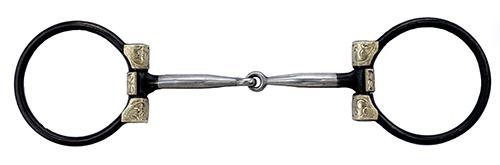
The mildest snaffle is great for introducing horses to a bit and for well-trained horses that are already light in your hands.
Twisted Snaffle
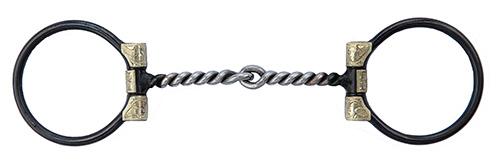
The twisted snaffle is meant for horses that lean on the bit and root against your hands. The design makes it uncomfortable for horses to pull against the bit and will teach them to soften to it.
Square Snaffle
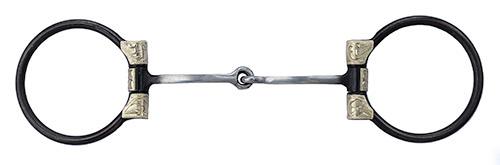
A square snaffle will discourage a horse from leaning on the bit even more. This bit is meant for horses that have spent years dragging the reins through their riders’ hands.
Once your horse is soft and respecting your hands, you can go back to using a milder bit. However, when you’re first working with a horse, it’s important to have the proper tools to get the job done correctly.
Now through August 28th, when you buy one bit, you’ll get a second one 50% off.
Shop the sale now
You must select both bits and add them to your cart.
