Training Tip: Pinny-Eared Horses
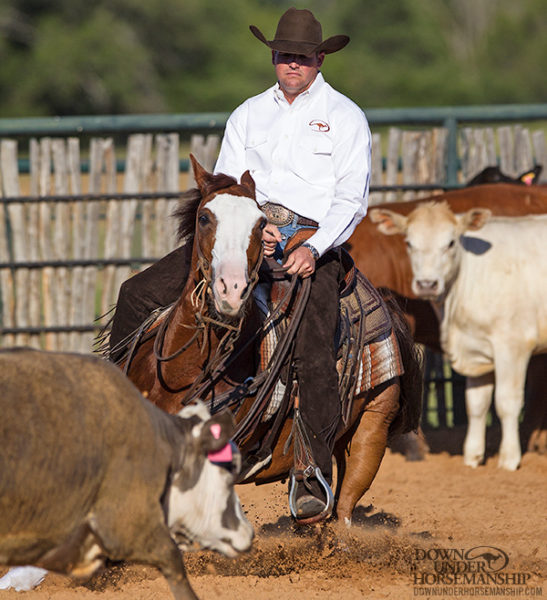
When we see horses being worked and their ears are pinned back, we often assume the horse is cranky or upset. While that can certainly be the case, it’s not always true.
When a horse is working really hard and paying close attention, he’ll often tip his ears back to his handler or rider, showing that he is concentrating. Cutting horses are a good example of this, because they’ll often pin their ears back as they’re cutting cattle. As they stop and turn and work a cow, they’ll lower their heads and necks to the ground and pin their ears back. And even though it looks like they’re being cranky, they really love their job. They’re just putting so much physical exertion into it that their facial expression doesn’t look pleasant.
It’s the same thing with an athlete that’s concentrating on the task at hand. If you’d look at a photo of a world-class tennis player just as they’re returning a ball, you can bet that their face and body wouldn’t be relaxed. Instead, their mouth might be open and you’d see veins popping out on their face. In that moment, they’d look extremely mad and angry because they’re putting so much physical force into hitting the ball that their body is tight. It’d be rare to catch them at that moment relaxed with a big smile on their face.
However, it’s important to note that horses that are made to do the same thing over and over again often get bored in their jobs and let you know by pinning their ears back. When I have a horse that knows his job and is good at it, I try to add as much variety as possible to his training schedule. Instead of working in the arena, I’ll take him out on the trail and practice going over obstacles. The more variety you add in your horse’s training program, the happier he’ll be.
