Know Your Climate Before Building
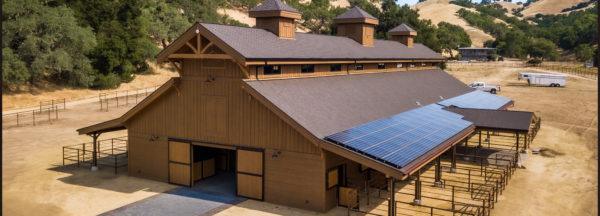
There’s a lot to think about when you’re planning to build a barn. From how best to position the barn on the property to what style of a barn you want to build. Your plans will quickly become detailed and extensive! But there’s one common factor that you don’t want to forget: Climate.
WHY CLIMATE MATTERS
The climate of your location can play a role in determining the types of barns that are most suitable for you. For instance, you wouldn’t want to build an open shed row style barn if you’ll be weathering severe winters – and if you did, then you would’ve wanted to make sure that the shed row had some sort of shelter by facing it towards a hillside or a dense line of trees. Climate should always be in the back of your mind as you design your barn.
PREPARING FOR TEMPERATURE VARIATIONS
It’s best to build your barn to accommodate the anticipated temperature variations that you will encounter. Open, airy barn plans are ideal for hot, arid climates where air circulation is important. For colder climates with harsh winters, you will want a barn that can provide plenty of shelter and heat retention during the winter. Additionally, consider what temperature fluctuations will mean to your entire operation. Will you need an indoor arena because of frozen ground during the winter, or can you do without in a milder climate?
USING THE SUN AND WIND TO YOUR ADVANTAGE
Before you plan your barn’s layout, consider the paths of the sun and wind. By orienting your barn aisle so that it follows the common path of the wind, you can open the barn doors during the summer to take advantage of the natural ventilation. Additionally, you may wish to position your barn so that the sun warms particular areas, such as the indoor arena, during the winter. If you opt to install solar panels to help power your barn, then knowing the path of the sun will be very important.
WHAT POTENTIAL RAINFALL MEANS FOR YOUR BARN
Finally, it’s important to consider the area’s annual rainfall. Areas with heavy rainfall require more planning and drainage preparation than drier areas do. When considering the area’s rainfall, make sure that you budget for adequate drainage for any outdoor areas you will be using frequently. Pastures can quickly become muddy, so you may want to install Stable-ity Grids in heavily trafficked areas such as by the pasture gates or water troughs. Consider the geography of your land – where will the extra rainwater run? If the answer is down a hill directly to your barn, then you will want to do some major site preparation to ensure that your barn doesn’t flood. Alternatively, moving the location of your barn may be a solution. The climate of your barn’s location is one factor that you really need to build around, so make sure to familiarize yourself with the climate when planning the location of your barn.

Photo Courtesy of DC Structures
Make sure to check out our brand new website, designed to help you navigate through our expansive product offering!
