A Training on the Trail Essential
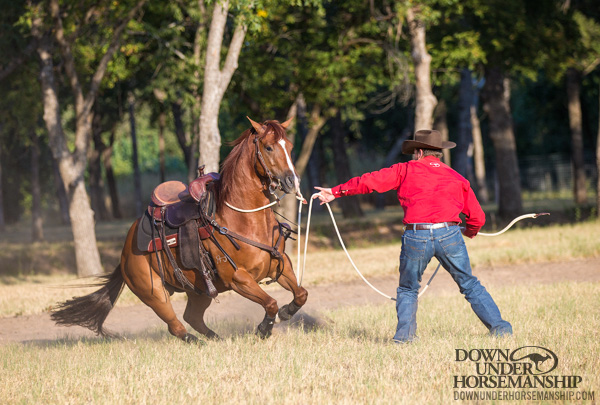
If you find yourself out on the trail this spring and your horse is a little fresh from having the winter off and spooks, don’t be afraid to dismount and spend a few minutes working with him on the ground. “There’s no shame in getting off the horse and working through his fear on the ground, especially if it puts you in a safer position. You can move the horse’s feet forwards, backwards, left and right on the ground just as well as you can from his back. A lot of people are under the impression that you should never get off a horse when you run into trouble because the horse will get away with his bad behavior and think that he won. The horse only “wins” if you get off and put him away, not if you get off and hustle his feet,” Clinton says. “Personally, I would much rather solve a problem on the ground than be in the saddle wishing I was on the ground. Once you have the horse’s feet moving, he’s using the thinking side of his brain and is no longer frightened, you can get back in the saddle. When I was apprenticing with Ian Francis, he used to say to me all the time, ‘There are a lot of heroes in the graveyard.’ Too many people get on horses that aren’t ready to be ridden and get bucked off. They break their necks and die because they didn’t use their heads. Preparation is key.”
Clinton’s number one training tool on the trail is his mecate bridle. The 22-foot long reins provide easy-to-adjust loop rein control and are fashioned with a built in lead rope. The weighted end of the lead rope makes the mecate the perfect training tool to do groundwork with your horse no matter where you are.
So if you find yourself in a situation in which your horse is overreacting, you can dismount and do groundwork exercises like the Sending Exercise to confront a spooky object or Lunging for Respect Stage Two to move the horse’s feet and get him using the thinking side of his brain. “The more changes of direction you do, the more your horse will pay attention to you. When a horse gets nervous, he’s going to have an excess of energy. It’s in your best interest to put that energy to work because if you don’t find something constructive to do with it, he’ll find something to do with it. I can guarantee whatever he finds won’t be your idea of a good time,” Clinton says.
Once your horse is relaxed and using the thinking side of his brain, then you can get back in the saddle and head down the trail again. “Anytime you’re feeling unsure of a situation, I’d much rather you get off the horse’s back and handle him from the ground. Always practice safety first,” Clinton says.
Learn more about Clinton’s mecate bridles on our website.
