Training Tip: Ask Clinton: Horse Doesn’t Trailer Well
Q: I have a 5-year-old ex-racehorse that I have been retraining since he was 3. He has been hauled thousands of miles all over the country for trail riding. In the past six months, he has started to throw his body, all 1,300 pounds, into the wall of the trailer while it’s moving down the highway. When we are stopped, he quits. He doesn’t do it all the time, but the longer the haul, the worse it gets. You can definitely feel it in the truck. How can I get him to stop doing this? – kathlie
A: Since your horse only starts to do this behavior when he’s been on the road for a while, you’ll have to get creative to fix this problem. First, it’s important to understand why your horse is throwing his body against the trailer walls. Because horses are prey animals, when they are made to go in tight, narrow spaces – such as a trailer – it’s natural for them to feel trapped and claustrophobic. When a horse feels trapped and claustrophobic and his ability to run and move his feet is taken away from him, his only other option he feels he has is to fight – kick, bite, strike or do whatever he can to survive the situation.
When horses go on the trailer relatively easily and then act out once in it, most owners of these horses think, “It can’t be a trailer-loading problem because he goes on willingly. It has to be a kicking or an acting-out issue.” That’s not true. Just because your horse goes on the trailer it doesn’t mean that he’s comfortable there.
You have to teach him to crave the trailer – thinking that it’s the best place in the world to be. In order to do that, work his feet outside of the trailer and let him rest inside of the trailer.
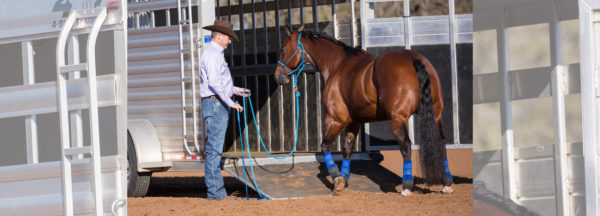
To work the horse outside of the trailer, you can send him between you and the trailer from one side of your body to the other or you can lunge him in a circle around you, asking him to change directions every so often. It doesn’t really matter what you do with the horse outside of the trailer as long as you make his feet hustle and change directions as often as possible.
After several minutes of working the horse’s feet outside of the trailer, let him rest inside of the trailer. Then drive around your property or an area where you can stop the trailer and hustle your horse’s feet if he starts to act out. This is where you’ll need to get creative to solve this problem. You need to find a safe area to work with your horse. You certainly wouldn’t want to do this alongside of a highway or busy road.
As soon as he starts throwing his body against the trailer walls, stop, unload him and make him hustle his feet. When he’s looking for a rest, load him in the trailer and let him relax. If you’re consistent, it won’t take long for him to realize that standing still and being in the trailer is a good thing because if he acts out, there’s nothing but hard work waiting for him outside of the trailer. With repetition, he’ll learn to stand still, not throw his body against the walls and relax.
Remember, the horse is acting out because he really doesn’t want to be in the trailer. If you can get the horse to think that the trailer is the greatest place in the world to be, he will no longer want to cause any problems in the trailer.
